
Online vs In-Person Therapy: Which Works Better & How to Choose the Right One?
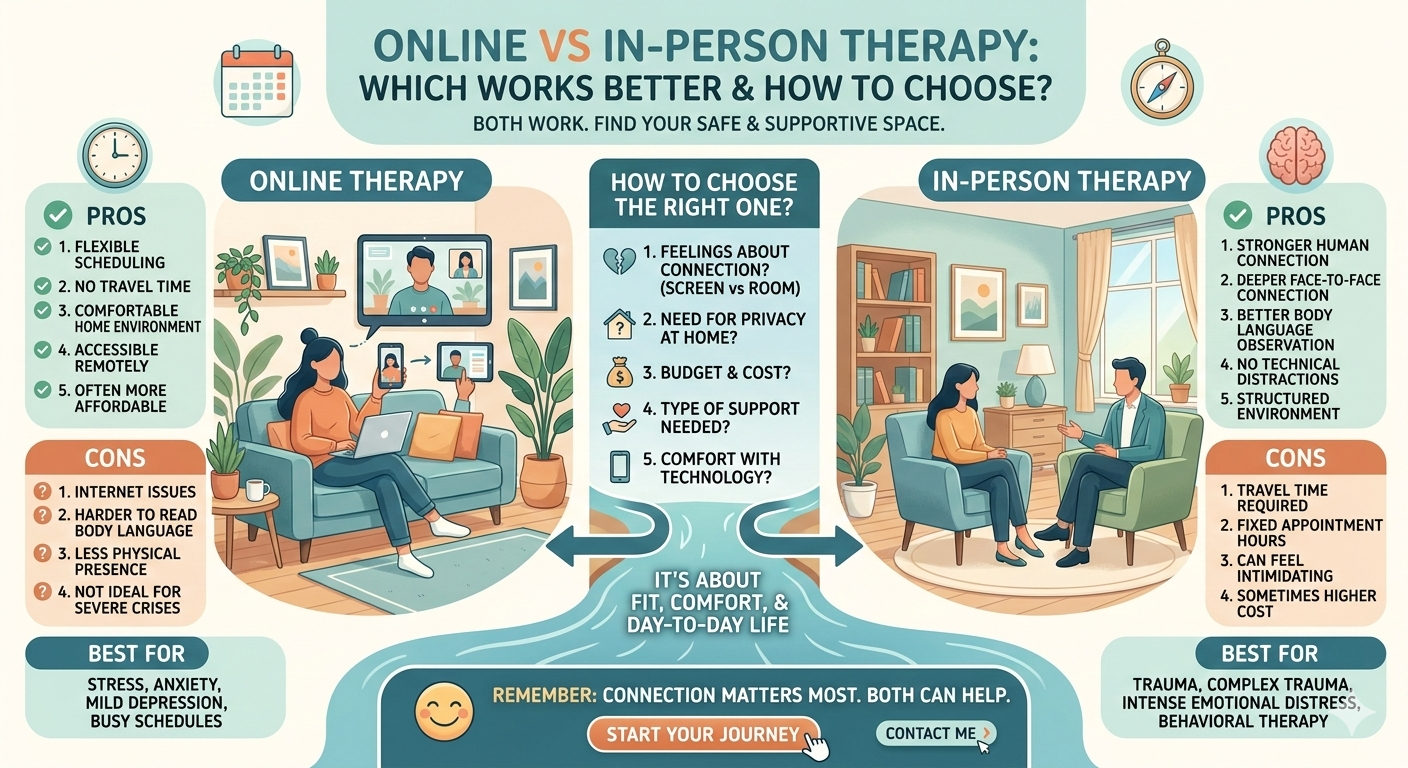
Both online and in-person therapy are effective forms of mental health counseling. Online therapy offers flexibility and comfort at home. In-person therapy provides a deeper face-to-face connection. The right choice depends on comfort level, budget, privacy, and the type of support needed. There is no single best option, only what feels safe and supportive.
When life feels heavy and thoughts refuse to slow down, reaching out for mental health counseling can feel like a huge step. And then comes the next question. Should it be online therapy or in-person therapy?
There is confusion everywhere. Some say virtual sessions are just as powerful. Others believe nothing replaces sitting across from a therapist in the same room. The truth is more personal than that. The answer depends on what feels right in your body and mind.
Online Therapy
Online therapy has grown fast in recent years. It allows access to mental health counseling services through video calls, phone calls, or even text sessions. For many people, this feels less intimidating.
Pros of online therapy
Flexible scheduling for busy routines
No travel time
Comfortable home environment
Easier access for people in remote areas
Often more affordable
Cons of online therapy
Internet issues can interrupt sessions
Harder to read body language
Less sense of physical presence
Not always ideal for severe crisis situations
Online therapy works well for stress, mild anxiety, relationship concerns, and ongoing emotional support. Many people feel safer opening up in their own space. For those starting therapy for anxiety or early-stage counseling for depression, online sessions can feel less overwhelming.
In-Person Therapy
In-person therapy offers traditional face-to-face mental health counseling inside a calm therapy clinic. Something is grounding about walking into a dedicated space meant only for healing.
Pros of in-person therapy
Stronger human connection
Better observation of body language
Fewer technical distractions
Structured environment
Cons of in-person therapy
Travel time required
Fixed appointment hours
Can feel intimidating at first
Sometimes higher cost
For deeper trauma, intense emotional distress, or complex behavioral therapy, many clients feel more supported sitting across from a trained professional. The physical presence often builds trust faster. It can feel real in a way that screens sometimes cannot replicate.
Which is the Better Option Among the Two
Here is the honest answer. Both work. Research shows that online mental health counseling can be just as effective as traditional sessions for many conditions. But effectiveness is not only about studies. It is about comfort.
Things to consider
Level of emotional crisis
Personal comfort with technology
Need for privacy at home
Budget
Type of therapy needed
For example, someone seeking cognitive behavioral therapy for anxiety may do well online. Someone processing trauma may prefer in-person sessions. It is not about better or worse. It is about fit.
How to Choose the Right One
Choosing between online and in-person therapy is not some logical checklist thing. It feels personal. Both fall under mental health counseling. Both can help. What matters is what actually feels right in day-to-day life. Sit with it. Think about these points.
Look at your comfort level: Some people open up better at home. Others need a real room and face-to-face space. When starting mental health counseling services, comfort is huge. If the setting feels off, sharing becomes harder.
Check your current mental state: If things feel heavy or unstable, in-person mental health counseling can feel more grounding. For everyday stress or therapy for anxiety, online sessions may work just fine.
Think about privacy: Online therapy only works well if there is a quiet space. Good counseling for depression needs privacy. Without it, conversations may stay surface-level.
Notice the connection: At the end of the day, connection matters most. Whether online or in person, mental health counseling works when trust feels natural.
At the end of the day, therapy is about connection, understanding, and growth. Whether that happens through a screen or across a quiet room, what truly works is showing up and allowing space for change. When you have made your decision and plan to take the next step towards better mental health, feel free to contact me. I will sit with you, patiently listen to your issues, and will try my best to help you live the life you desire.