
Fighting a Mental Battle Silently? 7 Signs It Might Be Time to Seek Therapy
Summary:
When emotional pain feels constant, heavy, and isolating, it may be time to consider therapy. This blog explores clear signs that support from mental health professionals, counselling, or psychotherapy could help. Seeking help is not a weakness. It is a step toward stability, clarity, and emotional healing.
Some battles make no sound. No one sees them. No one hears them. Yet they drain energy every single day. Smiles feel forced. Sleep feels broken. Thoughts feel loud and exhausting.
Fighting silently can feel strong at first. But over time, it becomes heavy. There comes a point when handling everything alone stops working. That is when therapy stops being an option and starts becoming necessary.
Clear Clues That It’s Time to See a Therapist & Seek Professional Help
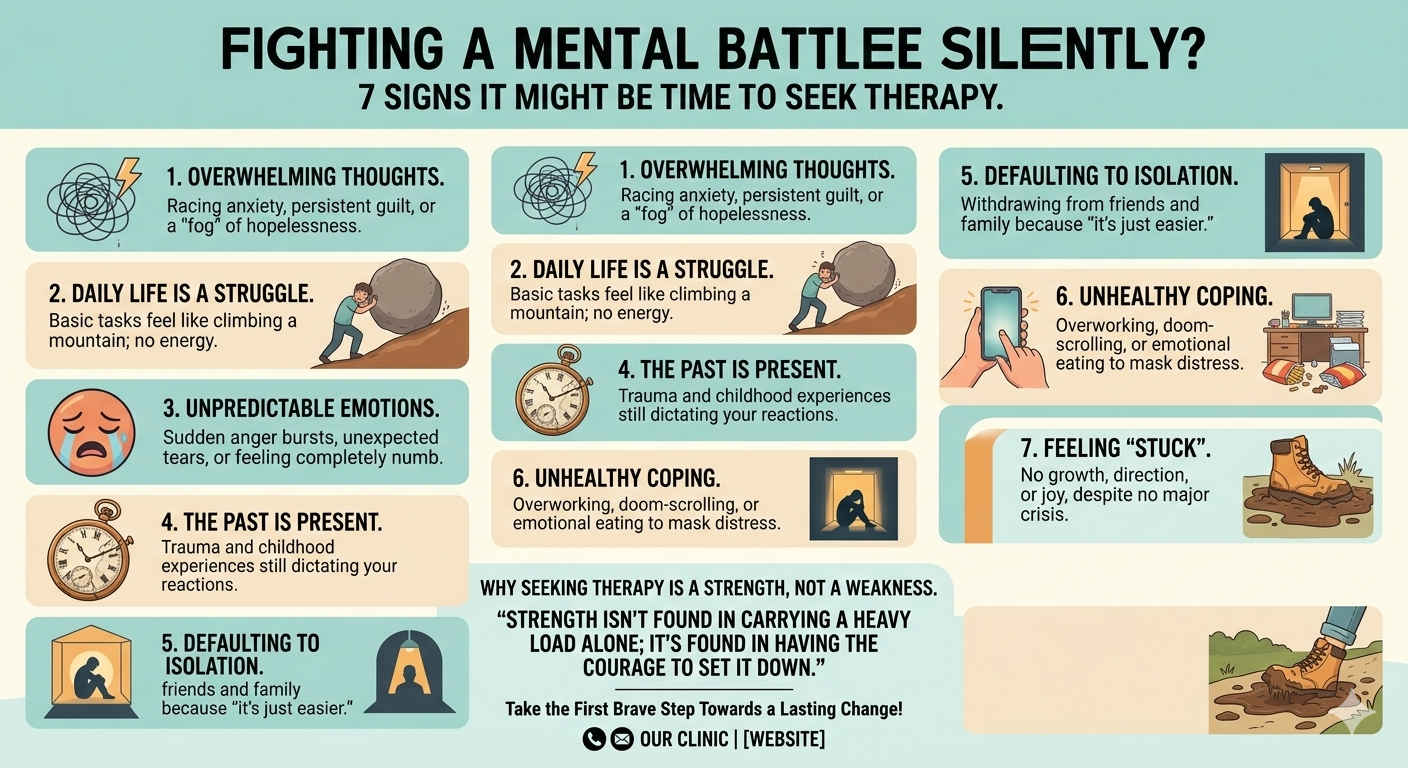
When Thoughts Feel Overwhelming
Everyone worries sometimes. But constant racing thoughts, fear, or sadness that refuses to lift can signal deeper mental health concerns. If anxiety, guilt, or hopelessness feel present most days, counselling can provide tools to manage emotions in healthier ways.
When Daily Life Feels Harder Than It Should
Getting out of bed feels like an effort. Simple tasks feel draining. Motivation disappears without a clear reason. When normal routines start feeling impossible, psychotherapy can help uncover what is happening beneath the surface and guide emotional recovery.
When Emotions Feel Out of Control
Sudden anger. Unexpected tears. Emotional numbness. When reactions feel bigger than situations, something deeper may be unresolved. Therapy sessions create a safe place to explore triggers, patterns, and coping strategies without judgment.
When Past Experiences Still Hurt
Old memories that still sting. Childhood experiences that still shape present reactions. Trauma that feels unresolved. If the past continues to influence current relationships or self-worth, trauma therapy or structured mental health support can help process and release that weight.
When Isolation Becomes the Default
Pulling away from friends. Avoiding conversations. Choosing silence over connection. Isolation often feels protective, but it increases emotional strain. Speaking with a qualified therapist provides connection, validation, and guidance without pressure or criticism.
When Coping Mechanisms Turn Unhealthy
Overworking. Emotional eating. Excessive scrolling. Substance dependence. These patterns often mask deeper distress. Professional psychological support helps replace harmful coping habits with healthier strategies that actually promote healing.
When You Simply Feel Stuck
Sometimes there is no dramatic breakdown. Just a quiet sense of being stuck. No growth. No clarity. No direction. In such moments, therapy offers perspective. It creates space to reflect, reset, and rebuild confidence step by step.
Why Seeking Therapy Is a Strength & Not a Weakness
There is a common belief that struggles should be handled alone. That strength means silence. That asking for help means failure. That belief is wrong. Seeking professional therapy is an act of courage. It means choosing stability over chaos. It means choosing growth over denial. It means acknowledging that mental well-being matters.
As a trusted psychotherapy clinic in London, we have handled a variety of cases and helped individuals struggling to live life to their potential break free from the chains holding them back. Our qualified psychotherapist, Jackie Maher, a registered member of the British Association for Counselling and Psychotherapy (MBACP), brings a lot of experience to the table and handles each case with care, sensitivity, and a personalised approach.
Take the First Brave Step Towards a Lasting Change!
Fighting a silent mental battle can feel lonely and exhausting. But silence does not have to continue forever. Recognising the signs and reaching out for therapy, counselling, or specialised psychotherapy can change the direction of life. Contact us to schedule a therapy session and gradually watch your life change for the better.