
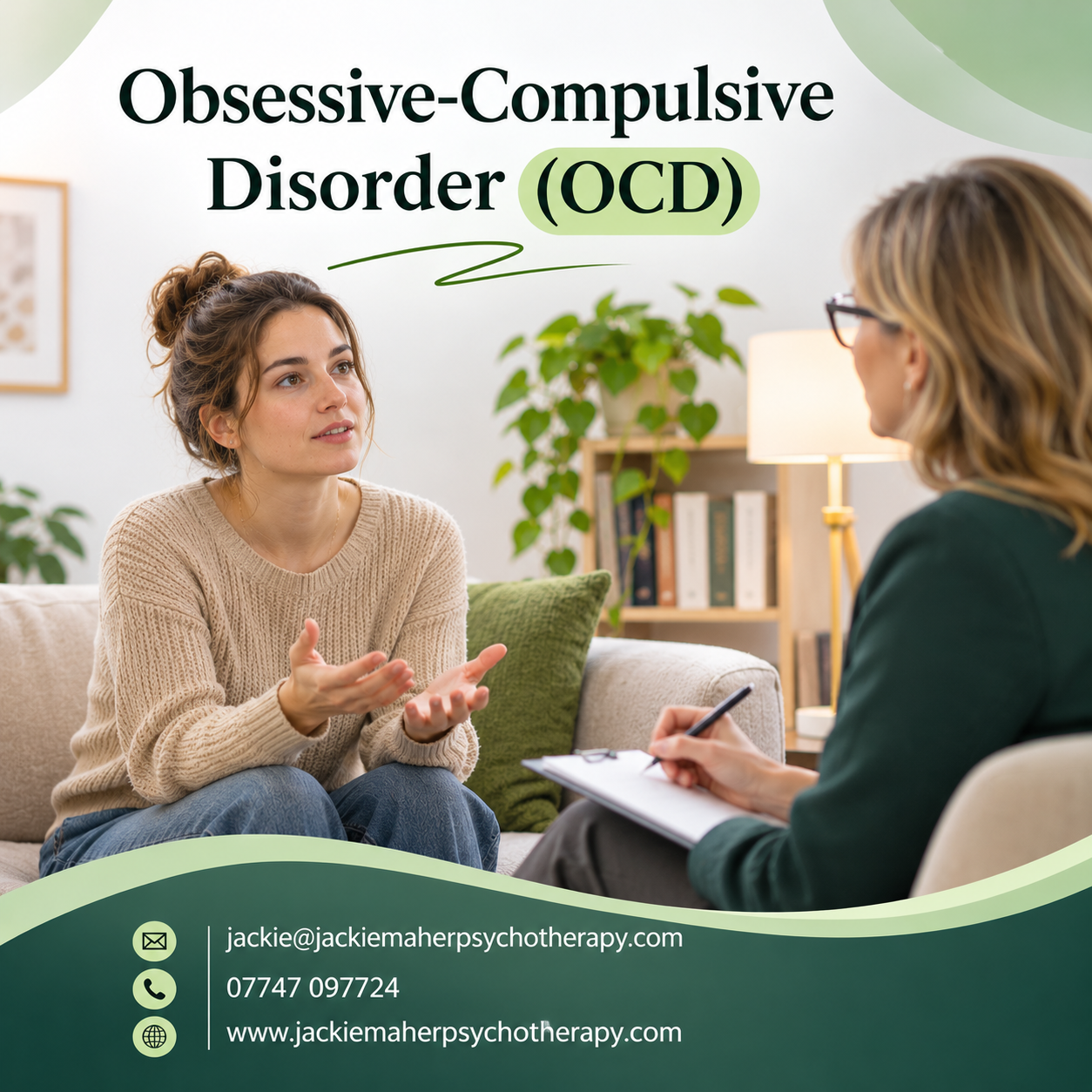
OCD, or obsessive-compulsive disorder, is a chronic mental health condition. It is characterised by intrusive thoughts and repetitive behaviours that significantly impact your daily life. OCD can disrupt daily life, relationships, and overall well-being. The good news is that effective treatment for OCD exists. However, medication is often a part of treatment, but therapy for obsessive-compulsive disorder plays a crucial role in managing symptoms and enhancing quality of life.
Hello! I am Jackie Maher, your integrative psychotherapist in London. By addressing the root causes and patterns of obsessions and compulsions, my therapy provides a path toward relief, healing, and reclaiming control. In this blog, I will explore how psychotherapy supports OCD recovery.
What Is Obsessive Compulsive Disorder (OCD)
OCD involves a bunch of obsessions and compulsions. Obsessions are unwanted and recurring thoughts, images, or urges which can cause significant distress. On the other hand, compulsions are mental rituals or repetitive behaviours that you feel driven to perform. This type of anxiety disorder includes fears of contamination, worries about harm, or a need for things to be "just right." How do you know that a person has OCD? Well, the symptoms can vary greatly from person to person, but the common signs include:
Persistent intrusive thoughts which are difficult to ignore
Feeling compelled to perform repetitive behaviours
A sense of unease or distress when rituals cannot be completed
Significant interference with daily activities or relationships
Being extremely organised and particular about cleanliness are common myths about OCD. But, in reality, it is a complex condition that can involve many different fears and repetitive behaviours.
The Ways Psychotherapy Supports OCD Recovery
Recognising Patterns
Recognising how obsessions and compulsions influence your daily life is the first step. As a professional therapist, I notice particular situations, thoughts, or emotions that trigger anxiety. It can help you identify what happens before and after a compulsive behaviour. With my guidance, you can explore these experiences without criticism and become more aware of your emotional responses.
Challenging Assumptions
OCD can make certain thoughts feel threatening or difficult to ignore. You might believe that something bad will happen unless you complete a particular ritual. I will guide you in questioning the fears and beliefs that drive those compulsions. This approach can foster healthier thinking.
Building Coping Skills
Instead of immediately responding to an uncomfortable thought, my specialised psychotherapy services in London help you learn to pause, recognise your emotions, and respond differently. I also introduce some strategies to handle anxiety, such as mindfulness, relaxation techniques, and self-compassion.
Creating Long-Term Change
Recovery from obsessive-compulsive disorder is not about eliminating your unwanted thoughts; it is about changing your relationship with those thoughts. With my professional guidance and consistent effort, you can create lasting improvements in your mental health.
Seeking help from a mental health professional is essential for those struggling with OCD. You do not have to face these challenges alone. When repetitive thoughts and behaviours interfere with everyday responsibilities, I can help you understand your difficulties and identify suitable ways forward. You can directly call me at +44 (0)7747 097724 to discuss your concerns or arrange an initial consultation.
FAQs:
What are the common symptoms of obsessive-compulsive disorder?
Common symptoms include intrusive thoughts, repetitive behaviours, anxiety when rituals are interrupted, and difficulties managing everyday activities.
How does psychotherapy help in managing OCD?
Psychotherapy helps identify triggers, challenge unhelpful beliefs, develop coping strategies, and change responses to obsessive thoughts.
Can psychotherapy help achieve long-term recovery from OCD?
Yes, consistent psychotherapy can help manage symptoms, build emotional resilience, develop healthier thinking patterns, and improve overall well-being.